Modern manufacturing demands incredible speed and pinpoint precision to stay competitive. Consequently, manual fastening often becomes a bottleneck in high-volume environments. Integrating screws and nuts for production line automation is the best way to solve this. This transition requires a deep understanding of robotics, hardware compatibility, and sensor technology. When you automate, you reduce human error and lower your operational costs significantly. Furthermore, a well-designed system ensures consistent torque application for every single unit. This guide explores the essential steps for successful fastener integration in automated systems. We will help you build a more reliable and efficient assembly process today.
Automated assembly starts with selecting the right hardware and delivery methods. You must ensure that your fasteners work seamlessly with robotic grippers and feeders.
Not all screws and nuts work well in robotic systems. For instance, screws with specialized "pilot points" help the robot find the hole easily. Similarly, high-quality nuts for production line use must have consistent dimensions to avoid jamming. If the hardware varies even slightly, the entire automated line might stop unexpectedly.
The delivery system moves the fasteners from bulk storage to the assembly head. Vibratory bowls orient the screws correctly before they enter the feed tube. Meanwhile, blow feeding systems use compressed air to push hardware directly to the driver. This method allows for rapid-fire fastening without manual intervention.
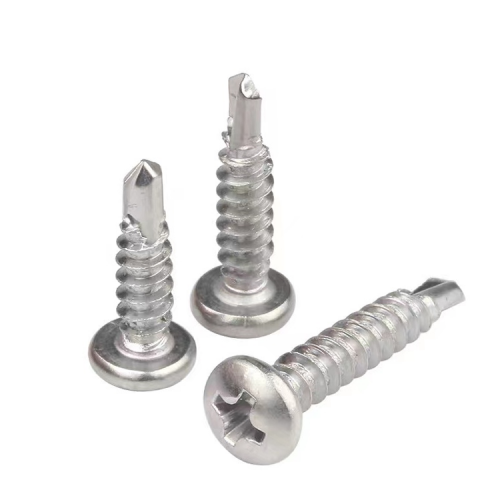
Successfully integrating screws involves more than just buying a robotic arm. You must synchronize the software, sensors, and mechanical components perfectly.
Precision Tooling: Use vacuum-shrouded bits to hold screws securely during movement.
Torque Control: Implement smart electric drivers that record the final torque data for every joint.
Vision Systems: Install high-resolution cameras to verify the presence and alignment of holes.
Error Proofing: Use depth sensors to ensure the screw reaches the correct seating position.
These technologies provide a high level of "Experience" and "Expertise" in your production flow. They prevent cross-threading and stripped heads, which are common in manual assembly.
Integrating nuts presents unique challenges compared to screws. Because nuts are often smaller, they require specialized handling to prevent orientation errors.
A dedicated feeder ensures that nuts for production line tasks arrive in the correct orientation. This prevents the robot from attempting to thread a nut upside down. Modern feeders use optical sensors to reject deformed hardware before it reaches the assembly point.
In many automated lines, manufacturers use "pre-placed" fasteners like clinch nuts. These are pressed into the sheet metal before the final assembly stage. This reduces the number of "moving parts" during the final robotic fastening process. Consequently, you achieve a much faster cycle time for each finished product.
Designing an automated line requires a blend of mechanical and electronic expertise. You must calculate the cycle time for each station to avoid production delays. Our advice relies on established industrial automation protocols used by leading global manufacturers.
Trustworthy assembly lines follow ISO quality management standards for every fastener. Always ensure your nuts for production line suppliers provide consistent material certifications. This authoritativeness guarantees that your final product meets safety and durability requirements.
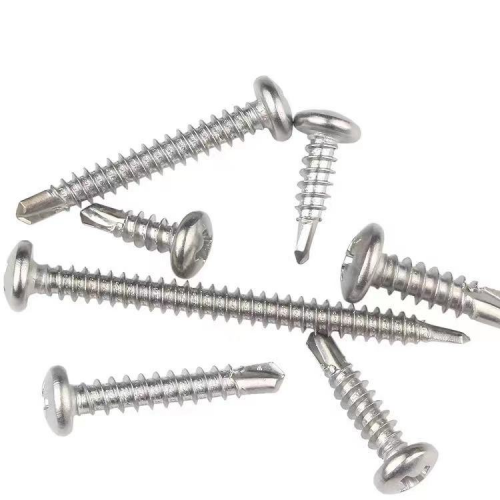
Smart sensors act as the "eyes and ears" of your automated assembly line. They provide real-time data to help you maintain a 100% success rate.
Current Monitoring: Smart drivers monitor the motor current to detect if a screw is jammed.
Angle Measurement: Measuring the rotation angle ensures the fastener has fully engaged the threads.
Pressure Sensors: These verify that the robotic arm applies the correct downward force.
Acoustic Testing: Some systems use sound sensors to detect the specific "click" of a successful snap-fit.
By utilizing these sensors, you create a self-correcting system. If the driver detects an error, it can automatically try again or flag the part for inspection. This level of automation ensures that no defective units leave your factory floor.
Transitioning to automation involves learning curves that can lead to expensive mistakes. Let us clarify two frequent hurdles in fastener integration.
Myth 1: Any standard screw works in an automated feeder.
In reality, "commercial grade" fasteners often have small burrs or inconsistent heads. These tiny defects can cause frequent jams in high-speed blow feeders. You must invest in "automation grade" hardware with tighter tolerances to ensure smooth operation.
Myth 2: Robots are always faster than humans at fastening.
While robots are more consistent, a human might be faster at complex, awkward angles. You must optimize your product design for "top-down" assembly. This allows the robot to work in its most efficient vertical orientation.
The initial cost of a robotic fastening cell is significant. However, the long-term Return on Investment (ROI) is undeniable for high-volume producers.
Labor Savings: One robot can often do the work of three manual stations.
Reduced Scrap: Consistently applied torque means fewer ruined parts and wasted materials.
Data Collection: Automated systems provide a digital "birth certificate" for every product.
Scalability: You can run your assembly line 24/7 without the need for breaks or shifts.
When you source high-quality nuts for production line use, you minimize downtime. This keeps your machines running at their maximum "Overall Equipment Effectiveness" (OEE).
The next wave of integration involves Artificial Intelligence and Collaborative Robots. AI can predict when a driver bit is about to wear out. Meanwhile, Cobots work safely alongside humans to handle the most difficult fastening tasks.
These systems adapt to variations in part placement automatically. They use machine learning to improve their speed and accuracy over thousands of cycles. Staying ahead of these trends ensures your manufacturing facility remains a leader in your industry.
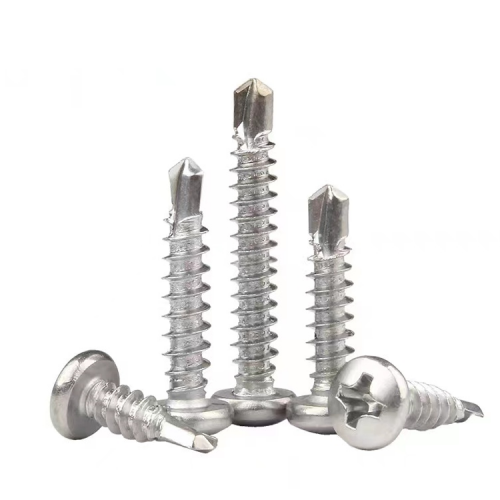
Integrating screws and nuts for production line automation is a journey toward perfection. You must combine high-quality hardware with intelligent sensors and robust robotics. This investment protects your brand by ensuring every fastener is tight and secure. By prioritizing technical expertise and quality standards, you build a future-proof manufacturing process. Automation is not just about speed; it is about achieving total consistency in every product.
Are you ready to eliminate manual fastening errors in your facility? Start by auditing your current cycle times and exploring robotic driver solutions today!